0 ratings


Secured transaction
Ubuy works hard to protect your security and privacy. Our advanced payment security system ensures confidentiality by encrypting your information during transmission using AES (Advanced Encryption Standards) and SSL (Secure Socket Layer) protocols. Your payment details are 100% secure as we do not share your payment details with third party sellers.
Our Top Logistics Partners


Fast
Shipping

Free
Return*

Secure Packaging

100% Original Products

PCI DSS Compliance

ISO 27001 Certified


Note: Step Down Voltage Transformer required for using electronics products of Ƙasar Amurika US store (110-120). Recommended power converters Saya yanzu.


What Stands Out
Seamless Integration
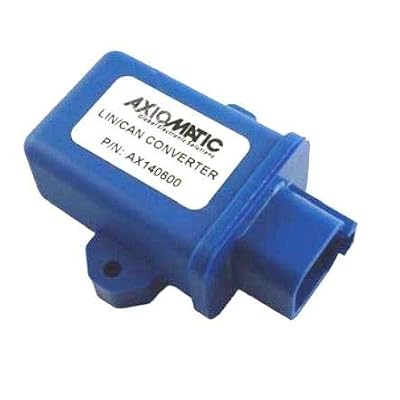
Easily convert LIN signals to CAN using our protocol converter, ensuring smooth communication between diversified automotive networks without tedious configurations or compatibility issues.
Robust Reliability
Built to withstand harsh automotive environments, our converter guarantees stable performance under extreme conditions, reducing failures and ensuring dependable data transmission for critical applications.
User-Friendly Setup
Designed with ease of use in mind, the LIN-CAN Protocol Converter features intuitive interfaces and straightforward setup processes, allowing users to implement changes quickly without specialized training.
Bayanin samfur
| Item Weight | 1.5 lbs (680 grams) |
Who Should Buy?

-
Fleet Operators
Ideal for companies managing multiple vehicles to ensure seamless integration with different communication protocols.
-
Vehicle Technicians
Mechanics can use this converter to diagnose and troubleshoot issues in heavy-duty vehicles with J1939 systems.
-
Industrial Equipment Users
Perfect for businesses utilizing heavy machinery needing interoperability between modern and legacy communication systems.

-
Casual Users
Not suitable for individuals with no technical background or understanding of vehicle communication protocols.
-
Low-Volume Users
Businesses with occasional or minimal usage may find investment in this converter unnecessary and cost-prohibitive.
-
Basic Vehicle Owners
Standard vehicle owners without heavy-duty applications will not benefit from advanced J1939 communication capabilities.
KWATANCEN ABUN
LIN-CAN Protocol Converter, SAE J1939
Kuna da wata tambaya? Yi taɗi da mu
Tambayoyi & Amsoshi na Abokan Ciniki
-
Tambaya:
What is the LIN-CAN Protocol Converter, SAE J1939 used for?
Amsa: The LIN-CAN Protocol Converter, SAE J1939 is designed for seamless communication between LIN and CAN networks. It allows devices operating on different protocols to exchange and interpret messages effectively, facilitating data transfer in modern automotive and industrial applications. This is particularly useful in systems where both network standards are implemented, such as in automotive diagnostics, telemetry, and control systems, ensuring interoperability between electronic control units (ECUs) that communicate over different networks. -
Tambaya:
How does the LIN-CAN Protocol Converter enhance vehicle data communication?
Amsa: The LIN-CAN Protocol Converter enhances vehicle data communication by enabling different systems within a vehicle to communicate efficiently. With this converter, installer or technicians can connect LIN-based sensors to CAN-based ECUs, allowing for broadened functionality and improved data integrity. For instance, data from a LIN sensor can be relayed through the CAN bus for real-time monitoring and analysis, enhancing the vehicle's diagnostic capabilities and overall performance. -
Tambaya:
What are the key features of the LIN-CAN Protocol Converter?
Amsa: Key features of the LIN-CAN Protocol Converter include protocol translation, high-speed data transfer, and support for multiple configurations. It effectively translates messages from LIN to CAN formats and vice versa, ensuring compatibility in mixed-protocol environments. Additionally, it offers configurable settings that can be customized depending on the requirements of specific applications, making it versatile for automotive diagnostics or industrial automation. -
Tambaya:
Can the LIN-CAN Protocol Converter be used in industrial applications?
Amsa: Yes, the LIN-CAN Protocol Converter is suitable for industrial applications, especially where both LIN and CAN networks coexist. Its versatility enables integration of various sensors and control units within industrial machinery that rely on these protocols for communication. For example, it can connect a LIN-based sensor measuring temperature to a CAN-based system for monitoring plant processes, thereby ensuring efficient operation and data collection. -
Tambaya:
What are common use cases for the LIN-CAN Protocol Converter?
Amsa: Common use cases for the LIN-CAN Protocol Converter include automotive diagnostics where technicians need to link LIN sensors to CAN networks, and in embedded systems where multiple communication protocols are utilized. For instance, a manufacturer may leverage this converter to monitor critical vehicle parameters by integrating different sensor types across the two networks, enhancing data analysis and vehicle performance evaluation. -
Tambaya:
Is the LIN-CAN Protocol Converter user-friendly?
Amsa: The LIN-CAN Protocol Converter is engineered for user-friendly integration into existing systems. With clear documentation and setup guidelines, users can quickly establish connections between LIN and CAN devices. It typically includes LED indicators for monitoring the status of data transmission. As a result, automotive technicians and engineers can routinely utilize this tool to enhance vehicle systems without extensive training. -
Tambaya:
What types of devices can be connected using the LIN-CAN Protocol Converter?
Amsa: The LIN-CAN Protocol Converter can connect a wide range of devices, including sensors, actuators, and ECUs that utilize LIN or CAN protocols. This flexibility allows for a broad application spectrum, from linking simple temperature sensors to more complex control modules in vehicles. For example, an automotive technician can integrate engine management systems with various sensors to optimize vehicle performance, making the converter invaluable in automotive scenarios. -
Tambaya:
Does the LIN-CAN Protocol Converter support multiple LIN IDs?
Amsa: Yes, the LIN-CAN Protocol Converter supports multiple LIN IDs, allowing it to manage communications from different LIN slaves simultaneously. This feature is especially valuable for systems where various sensors need to operate alongside each other while communicating with a central CAN controller. For instance, this capability lets fleet managers monitor diverse parameters across various vehicles effectively, making fleet management more efficient. -
Tambaya:
How do I install the LIN-CAN Protocol Converter?
Amsa: Installing the LIN-CAN Protocol Converter typically involves connecting it to both LIN and CAN networks and configuring necessary parameters according to the device documentation. Users should ensure compatible voltage levels and wiring to establish connections properly. Once set up, it can facilitate real-time data transfer between the networks seamlessly. Automotive technicians often use it to enhance diagnostics by allowing connected devices to communicate efficiently, thus saving time and improving accuracy. -
Tambaya:
Where can I buy the LIN-CAN Protocol Converter, SAE J1939?
Amsa: You can purchase the LIN-CAN Protocol Converter, SAE J1939 on Ubuy. They offer a reliable platform with a wide range of electronic components, ensuring you can easily find and acquire the necessary equipment for your automotive or industrial needs.
Software Editorial Review
Ba a sami sake dubawa na edita ba
Customer Reviews & Ratings
1 Ƙimar da abokan ciniki suka bayar
-
5 Tauraruwa
0%
-
4 Tauraruwa
100%
-
3 Tauraruwa
0%
-
2 Tauraruwa
0%
-
1 Tauraruwa
0%
Yi bitar akan wannan Samfurin
Faɗan wa sauran Abokan ciniki ra'ayin ka
Ribobi
- Easy to set up
- Compatible with multiple protocols
- Reliable performance
- Compact design
- Durable construction
Fursunoni
- Limited support documentation available
Product Price History
Sanarwa mai amfani
- Iyakoki: Don Abubuwan da aka yi sufurin su daga ƙasashen waje, a lura da cewa garanti ɗin mai ƙira ba lallai ya yi aiki ba; wajan neman taimakon mai ƙira ba lallai ya samu ba; kuma Littafin Sanin yanda abu yake aiki, hanyoyin tsaro da umarni ba lallai ya kasance a yaren ƙasar mai siya ba; Samfurin kaya (da sauran kayan haɗi) ba lallai ne an ƙera su a bisa tsarin ƙasar da za a kaya kayan ba, da ƙayyadaddun bayanai, ko dokar yin alama ko laƙabi; kuma ba lallai bane samfuran kayan su dace da ma'aunin wutar lantarki na voltage ɗin kasar da sauran dokokin ƙasa na wutar lantarki (wanda za'a buƙaci amfani da na'urar adafta ko na'urar canza launi idan ya dace). Mai karɓar kaya shi/ita ke da alhakin tabbatar da cewa samfurin da aka siya za'a iya shigo da shi ƙasar da za'a kai a bisa dokar ƙasar. A yayin yin oda daga Ubuy ko masu alaƙa da su, mai karɓar oda ne mai shigo da kaya, kuma dole ya/ta tabbarar da cewa ya/ta bi duka dokokin ƙasar da za'a kai kayan.
- Ba dukkan abubuwan da aka saka a kan Ubuy bane na sayar wa, don Ubuy wajen bincike ne na duk duniya. Duk wani Samfurin abu yana da dokokin shige da fice na ƙasashe da kuma dokokin siye da sayar wa.
Currently unavailable.
We don't know when or if this item will be back in stock.
This item is not restrict in my country.(Please click on above link if this item is not restrict in your country, So our team will review and allow.)
Secured transaction
Ubuy works hard to protect your security and privacy. Our advanced payment security system ensures confidentiality by encrypting your information during transmission using AES (Advanced Encryption Standards) and SSL (Secure Socket Layer) protocols. Your payment details are 100% secure as we do not share your payment details with third party sellers.
Our Top Logistics Partners
Fastest cross-border delivery